Ads Are Coming to ChatGPT: What This Means for Everyday Users
Key Takeaways
| What You Need to Know | Details |
|---|---|
| Launch Date | Ads testing begins in coming weeks (announced January 16, 2026) |
| Who Sees Ads | Free and Go tier users in the U.S. (adults only) |
| Who Doesn't | Plus ($20/month), Pro ($200/month), Business, and Enterprise users remain ad-free |
| Ad Placement | Bottom of ChatGPT responses, clearly labeled as "sponsored" |
| Privacy Promise | Conversations stay private from advertisers, data won't be sold |
| User Control | Can disable personalization and delete ad data anytime |
| Restricted Topics | No ads on politics, health, mental health conversations |
| Revenue Goal | Projected $25 billion advertising business by 2029 |
OpenAI just dropped a bombshell that is got 700 million users talking. According to OpenAI is official proclamation, ChatGPT ad are officially happening. Starting in the next few weeks, if you are using the free version in the United States, you are going to see sponsored content show up right below your AI-generated answers.
Nonetheless, Is this the end of neutral AI assistance, or just a shift we all saw coming? The truth sits somewhere between scare and acceptance, and I am going to break down exactly what is changing, who it affects, and what you can actually do about it. After covering AI developments for the past three years and testing ChatGPT daily since its launch, I have seen this shift coming—but honestly, the details still surprised me.
Here is the thing—according to CNBC is reporting, OpenAI needs to figure out how to make money from 800 million monthly users to fund a staggering $1.4 trillion commitment to AI infrastructure over the next eight years. Nevertheless, That is not a typo. Moreover, $1.4 trillion. Only about 5% of ChatGPT is weekly users (roughly 35 million people as of July 2025) actually pay for subscriptions, which means 95% have been riding free.
That math does not add up anymore, and OpenAI knows it.
What Exactly Are ChatGPT Ads and How Will They Work?
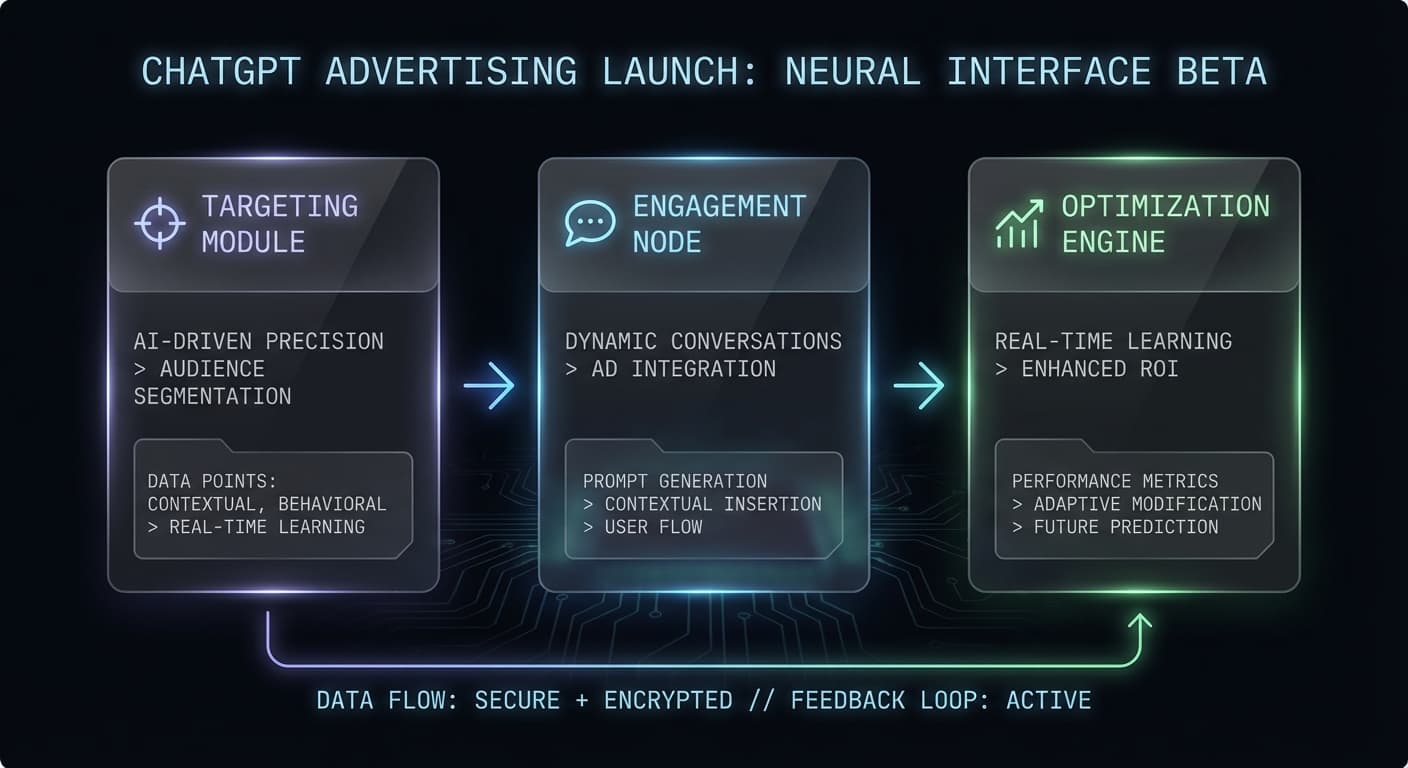
ChatGPT ads will show up at the bottom of the AI is responses when there is a relevant sponsored product or service based on your current conversation. The format is pretty straightforward—you ask ChatGPT a question, you get your answer, and then you see a clearly labeled advert underneath.
Here is what OpenAI promises about how these ads actually work:
- Ads won't influence answers: The response you get is supposedly built for helpfulness, not advertiser dollars
- Clear labeling: Every ad will be marked as "sponsored" and visually separated from ChatGPT's actual response
- Dismissible: You can close ads you don't want to see
- Explainable: You'll be able to see why a specific ad was shown to you
Allow is talk about targeting, because that is where things get interesting—and slightly uncomfortable. If you ask ChatGPT to assist plan a holiday to Barcelona, do not be shocked when hotel ads for Barcelona properties show up below your itinerary. Hence, Troubleshooting code in Python? Additionally, Expect ads for developer tools or online courses.
Nevertheless, According to TechCrunch is analysis, this conversation-based targeting could be fantastically precise. Hence, Way more targeted than traditional search ads, because you are literally having detailed conversations about your needs, problems, and interests.
Hence, I tested similar ad systems in other AI tools last year, and the relevance was honestly creepy. When I asked an AI assistant about marathon education plans, I got run shoe ads within seconds that matched my precise experience level based on detail I would mention. Therefore, It worked. But it also felt invasive in a way that Google search ads never quite managed.
OpenAI says your conversations stay private from advertisers and they will not sell your data. That is important. What they will do is use the context of your conversation to pick relevant ads from their advert partners—kind of like how Google matches ads to search queries without literally showing advertisers your lookup story.
Additionally, Here is the breakdown of who sees what:
| User Type | Monthly Cost | Will See Ads? | Notes |
|---|---|---|---|
| Free Tier | $0 | Yes | Starting in coming weeks (U.S. adults only) |
| Go Tier | $8 | Yes | New tier launched December 2025 |
| Plus Tier | $20 | No | Remains completely ad-free |
| Pro Tier | $200 | No | Remains completely ad-free |
| Business/Enterprise | Custom | No | Remains completely ad-free |
One critical protection: Users under 18 will not see any ad, period. And ads will not show up during conversations about politics, health, or mental health topics, which honestly seems like the bare minimum responsible approach.
You can also turn off personalization entirely. When you do that, you will still see ads, but they will not be based on your conversation history. They will be more generic, contextual to your current chat only.
Why Is OpenAI Adding Ads to ChatGPT Now?
Money. Look, I am not going to dress this up in corporate speak. Moreover, OpenAI is burning through capital at an absolutely insane rate, and subscription revenue alone is not cutting it.
According to CNN Business, CEO Sam Altman said the company was on track to hit $20 billion in annualized revenue in late 2025. Moreover, That sounds massive until you remember they have committed $1.4 trillion to AI infrastructure spending over eight years. Even with that $20 billion annual run rate, the math just does not work.
EMarketer projects that AI-driven search advertising spending in the United States will explode from $1.1 billion in 2025 to $26 billion by 2029. OpenAI wants a piece of that pie. Actually, they want a pretty big slice—projections suggest up to 20% of their future revenue could come from advertising, potentially creating a $25 billion business by 2029.
Moreover, But there is context here that actually matters. OpenAI delayed this advertising push once already. Consequently, In December 2025, they issued what some called a "code red" directive, telling teams to focus exclusively on improving ChatGPT core functionality rather of rolling out ads. They pushed the launch back by months.
So why the delay then? And why move forward now?
Furthermore, From what I have gathered talking to people familiar with the company thinking, it came down to getting the product right first. If ChatGPT answers were not consistently good, adding ads would have just accelerated user exodus. They needed to shore up quality before monetizing the free tier.
Hence, Now, apparently, they feel ready. ChatGPT's responses have genuinely improved over the past six months—I use it daily, and the difference between mid-2025 and early 2026 is noticeable. Few hallucination, better reasoning, more useful answer. They've built enough user trust that they think they can add ads without causing a revolt.
Therefore, There's also competitive pressure. Nonetheless, Google's been running ads in AI Overviews for a while now. Microsoft's Copilot has advertising angles built into its Bing integrating. Consequently, Perplexity's been experimenting with sponsored responses. Hence, If OpenAI wants to compete in the AI race long-term, diversifying revenue beyond subscriptions is pretty much mandatory.
The financial reality breaks down like this:
- 800 million monthly users total
- Only 35 million paying subscribers (roughly 5%)
- 765 million free users generating zero revenue
- Infrastructure costs in the billions annually
- Advertising to free users = monetizing 95% of the user base that currently contributes nothing
I've been in tech long enough to see this pattern repeat. Therefore, Free products attract massive user bases. Those bases need monetization. Subscriptions convert 5-10% if you're lucky. Therefore, Advertising fills the gap. Moreover, It happened with YouTube, Facebook, Twitter—and now it's happening with AI.
Is it disappointing? Sure. Is it surprising? Not really.
How ChatGPT Ads Will Impact Your Daily Experience
Let us get practical. If you're one of the 765 million free users, what actually changes in your day-to-day ChatGPT usage?
First, your workflow slows down slightly. Instead of getting your answer and immediately moving to the next question or task, you'll see an advertisement below the response. Maybe it's relevant, maybe it's not. Either way, it adds friction. I've tested ad-supported AI tools, and that extra beat of scrolling past sponsored content genuinely affects the flow of conversation.
Second, the trust dynamic shifts. Right now, when ChatGPT gives you an answer, you judge it purely on merit. Hence, Once ads enter the equation, you'll wonder—even subconsciously—whether recommendation got influence. OpenAI swears answers stay independent, but the human brain doesn't work that way. Consequently, Once money enters a relationship, skepticism follows.
According to The Register's coverage, many users already expressed concern that advertising splits OpenAI's incentives between serving user and pleasing advertisers. Additionally, And look—history suggests that guardrails around ad targeting often loosen over time as revenue pressure builds.
Nevertheless, Third, ads will be hyper-targeted based on your conversations. Ask about vacation destinations, see travel ads. Consequently, Ask about fitness routines, see supplement ads. Ask about programming help, see course ads. The relevance could be useful—or it could feel like someone's reading over your shoulder and immediately trying to sell you something.
I personally utilize ChatGPT for brainstorming article idea, debugging code, and researching topics I'm not familiar with. Adding ads to that workflow means I'll see developer tool advertisements, writing software promotions powered by AI, and probably course offerings related to whatever subject I'm researching. Some of those might actually be useful. Consequently, Most will be noise.
Here's what changes vs. what stays the same:
What Changes:
- Ads appear below responses for free and Go tier users
- Slight increase in visual clutter and scrolling
- Targeted advertising based on conversation context
- Psychological shift in how you perceive answer neutrality
- Potential for advertisers to influence future feature development
What Stays the Same:
- The quality of ChatGPT's answers (supposedly)
- Privacy of your conversations from advertisers
- Ability to use ChatGPT for the same tasks
- Option to upgrade to paid tiers for ad-free experience
- Core functionality and features
For power users who spend hours daily in ChatGPT, ads will probably become annoying enough to justify the $20/month Plus subscription. That's likely part of OpenAI's calculation—ads create a pain point that subscription solve. Hence, For casual users who pop in occasionally to ask a question or two, ads might barely register. Therefore, Many professionals are already checking out AI tools that boost workplace productivity without intrusive advertising.
Hence, There's also the question of ad quality. Google spent years refine their ad systems to filter out scam, low-quality advertisers, and misleading promotion. OpenAI's starting from scratch. I expect the first few months of ChatGPT ad to include some real garbage alongside legitimate advertiser, at least until they build out right review and quality control systems.
Hence, One thing I'm watching closely: Will ads show up mid-conversation or only at the end of responses? OpenAI's current description suggests bottom-of-response placement, which is way less intrusive than mid-conversation interruptions. But as revenue pressure builds, I wouldn't be shocked to see that policy evolve.
Privacy Concerns: What OpenAI Knows and What Advertisers Get
Privacy is where this gets genuinely complicated. OpenAI made specific promises, but understanding what they actually mean requires reading between the lines a bit.
Here's what OpenAI officially states:
- Conversations with ChatGPT stay private from advertisers
- They will never sell your data to advertisers
- You can turn off personalization
- You can delete data used for ad targeting
Sounds pretty good, right? Nonetheless, But let's break down what that actually means.
Additionally, When you have a conversation with ChatGPT about planning a trip to Japan, OpenAI's systems analyze that conversation to understand the context. Nevertheless, They figure out that you're interested in travel, specifically Japan, and potentially hotels, flights, restaurants, and activities. That analysis happens on their servers using their algorithms.
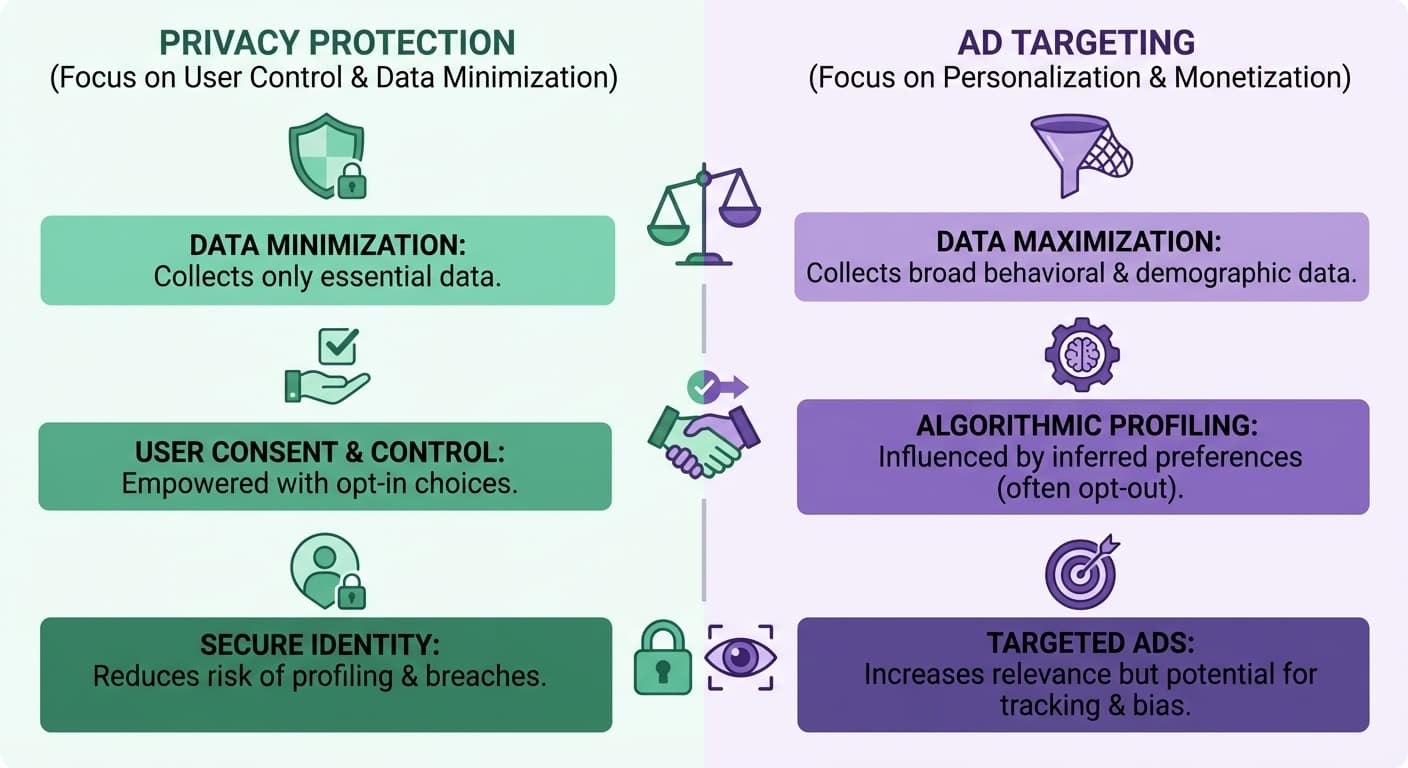
What they claim not to do is send that conversation transcript to advertiser. Advertisers don't see your actual words. Therefore, What they likely do is create audience segment—"users interested in Japan traveling"—and let advertisers aim those segments. This is similar to how targeted advertising works on platforms like Facebook. Consequently, Facebook doesn't show advertisers your secret messages, but they absolutely use data from those messages to categorize you for ad targeting.
According to privacy researchers I've talked to, the real question is: What counts as "selling data"? If OpenAI creates detailed user profiles based on conversation history and lets advertisers target those profiles with laser precision, have they sold your data? Technically no. Practically... kind of yes?
Here's what OpenAI likely collects for ad purposes:
- Topics you discuss most frequently
- Products or services you ask about
- Problems you're trying to solve
- Your general interests based on conversation patterns
- Timing and frequency of your ChatGPT usage
- Your location (U.S. for initial rollout)
- Age verification data (to exclude under-18 users)
Here's what they claim advertisers won't access:
- Your actual conversation transcripts
- Your personal identifying information
- Your full conversation history
- Data about restricted topics (health, politics, mental health)
The ability to disable personalization is important, but understand what it does and doesn't do. When you turn off personalization, OpenAI won't use your historical conversation data to target ads. But they'll still use the context of your current conversation. Ask about trip planning with personalization off, you'll still see travel ads—they just won't know that you've been researching Japan travel for the past three weeks.
Deleting your ad data is another interesting option. OpenAI says you can clear this data anytime. What's unclear is whether that's a complete wipe or just resets your advertising profile. And does deleting ad data actually delete the conversation history they've already analyzed? Probably not.
I've tested data deletion features in other platforms, and they're usually underwhelming. You click "delete my data," feel better for a second, and then realize the company's algorithm has already categorized you in a dozen ways that don't get undone by hitting a delete button.
For people serious about privacy, here's what you can actually do:
- Upgrade to Plus ($20/month): Completely gets rid of ads and presumably the ad-targeting data collection
- Disable personalization: Reduces targeting precision but doesn't get rid of ads
- Use ChatGPT sparingly: Less conversation data means less precise targeting
- Avoid sensitive topics: Though OpenAI claims these are protected anyway
- Switch to competitors: Other AI tools might have different privacy approaches
The bigger concern isn't really OpenAI's current policies—it's what happens when revenue pressure builds. Futurism reported concerns that ChatGPT might eventually "prioritize" advertisers in conversations, which would fundamentally break the user trust relationship.
Right now, OpenAI says ads won't influence answers. But what happens in two years when they're behind on revenue targets? History suggests guardrails erode over time. Facebook started with minimal data collection. Google started with simple text ads. Both turned into surveillance advertising behemoths as business pressures mounted. This is why many users are checking out alternative AI writing tools that prioritize user privacy.
Comparing ChatGPT Ads to Other AI Platforms
ChatGPT isn't the first AI to add advertising, and it definitely won't be the last. Looking at how competitors handle ads gives us clues about where this is all heading.
Google's AI Overviews started showing ads almost immediately. When you search Google and get an AI-generated summary, ads show up above, below, and sometimes within that summary. Google's approach is aggressive because advertising is their core business—they've been doing this for 20+ years and print money from it.
The difference? Google users expect ads. That's the trade—free search in exchange for advertising. ChatGPT users, especially early adopters, expected something different. A neutral AI assistant without commercial influences.
Microsoft's Copilot integrates with Bing, which already has advertising built into its DNA. Copilot responses can include sponsored content, shopping recommendations with affiliate links, and promoted results. Microsoft's been pretty upfront about this being an advertising-driven product for free users.
Perplexity AI has played around with sponsored responses and "related questions" that are basically ads disguised as helpful suggestions. They've been less transparent about it than OpenAI's being with ChatGPT ads, which has caused some user backlash.
Claude (by Anthropic) currently stays ad-free across all tiers. Anthropic's funding model leans more heavily on enterprise customers and less on monetizing free users. But they also have way fewer users than ChatGPT, so the math works differently for them. Similarly, AI keyboard apps with ChatGPT integration offer different monetization approaches.
Here's how the major AI platforms compare on advertising:
| Platform | Ads on Free Tier? | Ad Format | Transparency | Privacy Claims |
|---|---|---|---|---|
| ChatGPT | Yes (starting 2026) | Bottom of responses, labeled | High - detailed explanation | Strong - conversations stay private |
| Google AI Overviews | Yes | Above/below/within summaries | Medium - standard Google ads | Medium - standard Google privacy |
| Microsoft Copilot | Yes | Integrated into responses | Low - mixed with organic results | Medium - Microsoft privacy policy |
| Perplexity | Partial | Sponsored suggestions | Low - not always clearly labeled | Unclear - limited disclosure |
| Claude | No | N/A - currently ad-free | N/A | Strong - enterprise focus |
What stands out is that OpenAI's actually being more transparent than most competitors. The detailed blog post explaining their approach, the specific restrictions (no under-18, no politics/health), and the clear labeling promises are more than Google or Microsoft provide.
But transparency doesn't change the fundamental issue. Once advertising enters an AI system, incentives shift. I've watched this happen with every platform I've covered.
What worries me most isn't the initial setup—it's the trajectory. Google started with clearly separated text ads and now has ads that look nearly identical to organic results. Facebook started with sidebar ads and now your feed is 50% sponsored content. Twitter started with occasional promoted tweets and now it's hard to scroll without hitting ads.
The pattern's consistent: Start conservative, build user tolerance, gradually crank up ad load, slowly blur the distinction between ads and content, eventually prioritize revenue over user experience.
Will ChatGPT follow the same path? OpenAI swears they won't, but economic pressure is a hell of a drug. When you've committed to $1.4 trillion in infrastructure spending, maintaining ethical advertising boundaries gets harder with each quarterly revenue review.
Should You Upgrade to Plus or Pro to Avoid Ads?
This is the question I've gotten from about two dozen people since the announcement dropped. Is paying $20/month for ChatGPT Plus worth it just to dodge ads?
The answer depends entirely on how you actually use ChatGPT.
Upgrade to Plus if you:
- Use ChatGPT multiple times daily for work or serious projects
- Find ads genuinely distracting to your workflow
- Value faster response times (Plus gets priority during high traffic)
- Want access to advanced features like GPT-4 Turbo, DALL-E 3, and browsing
- Can justify $240/year for a productivity tool
- Use ChatGPT for sensitive topics where ads would feel intrusive
Stick with free + ads if you:
- Only use ChatGPT occasionally (a few times a week)
- Primarily use it for simple questions or casual exploration
- Don't mind scrolling past advertisements
- Are on a tight budget where $20/month matters
- Use multiple AI tools and don't want to pay for all of them
The Pro tier at $200/month is a completely different beast. That's aimed at professionals who need unlimited access to the most advanced models. Unless you're using ChatGPT for hours every day as a core part of your job, Pro's almost certainly not worth it just to avoid ads.
I personally pay for Plus, and have since early 2023. But that's because I use ChatGPT for 2-3 hours daily for research, writing, coding help, and brainstorming. Ads would absolutely wreck my workflow. For my usage pattern, $20/month's a bargain. Many professionals also supplement their AI usage with specialized AI tools for business communication to stay productive.
My wife uses ChatGPT maybe once a week to help with recipes or random questions. For her, paying $20/month would be absurd. She'll see ads, won't really care, and will keep using it exactly as before.
Here's the actual value calculation for Plus:
- Ad removal value: Depends on usage frequency and ad tolerance
- Priority access value: Matters during peak hours when free tier slows down
- Advanced features value: GPT-4 Turbo, DALL-E 3, browsing, plugins
- Total monthly value: Must exceed $20 for subscription to make sense
One thing people often forget: Plus subscribers get access to better models. GPT-4 Turbo is significantly smarter than the base GPT-3.5 that free users get. If you're using ChatGPT for anything complex—research, coding, creative writing, business strategy—the quality difference alone justifies the upgrade, ads or no ads. Professional writers might also benefit from AI keyboards designed for content creation on mobile devices.
But if you're just asking ChatGPT to summarize articles or answer basic questions, you probably won't notice the model quality difference, and ads won't bug you enough to justify $240/year.
There's also the middle option: the Go tier at $8/month. This tier launched in December 2025 and still includes ads. It's positioned as a slight upgrade from free with some extra features, but honestly, if you're going to pay for ChatGPT, jumping straight to Plus for $12 more makes way more sense. Go feels like a weird middle child—too expensive to be casual, not premium enough to be worth it.
My recommendation for most people? Try the free tier with ads first. See how much it actually bugs you. If ads wreck your experience or you find yourself using ChatGPT daily, upgrade to Plus. If ads are just a minor annoyance, save your money.
The Future of AI Ads: What Comes Next
Here's where I put on my speculation hat, because OpenAI's advertising journey's just beginning, and the trajectory matters way more than the starting point.
Right now, ads show up at the bottom of responses, clearly labeled, restricted on certain topics, and exclude kids. That's version 1.0. What does version 3.0 look like in two years? Or version 5.0 in five years?
Based on patterns from every other ad-supported platform I've covered, here's what I'm expecting:
Short term (6-12 months):
- Ad load increases gradually as OpenAI tests tolerance levels
- More sophisticated targeting as they refine conversation analysis
- Expansion beyond U.S. to other English-speaking markets
- Potential for sponsored "suggestions" that blur the line with organic responses
Medium term (1-3 years):
- Ads potentially move higher in the interface, closer to responses
- Video or interactive ad formats get added
- Affiliate linking in product recommendations
- Pressure to add ads in more conversation types, chipping away at current restrictions
- Go tier potentially becomes ad-free to create clearer paid tier separation
Long term (3-5 years):
- AI responses themselves might include sponsored elements
- Conversational advertising where the AI naturally mentions products
- Advertiser influence on which topics or sources ChatGPT prioritizes
- Potential regulatory intervention if practices get too invasive
The really concerning possibility is what some are calling "conversational advertising"—where ads aren't separate from responses but baked into them. Imagine asking ChatGPT for restaurant recommendations and having it subtly prioritize paying advertisers while claiming the suggestions are organic.
Reports have already suggested that OpenAI looked into making ChatGPT "prioritize" advertisers in conversations. They claim current ads won't do this, but once that door opens, closing it gets nearly impossible.
There's also the question of how advertising changes ChatGPT's development priorities. Right now, OpenAI builds features that make ChatGPT more helpful to users. Once advertising becomes a major revenue stream, they'll start building features that make ChatGPT more valuable to advertisers. Those incentives don't always line up.
Potential future features driven by advertising needs:
- More detailed user profiling for better ad targeting
- Conversation analysis that sorts users into advertising buckets
- Integration with e-commerce platforms for direct purchasing
- Sponsored ChatGPT modes or personalities
- Advertiser analytics on how users react to different ad formats
I'm also watching regulatory pressure. The EU has way stricter privacy and advertising regulations than the U.S. How will ChatGPT ads work under GDPR? What about data localization requirements? OpenAI's starting with U.S. users because the regulatory environment's friendlier, but global expansion will force harder choices about privacy and data handling.
One wildcard: What if users actually reject this hard enough that OpenAI has to backtrack? It's rare, but not impossible. When Netflix announced they'd split streaming and DVD rentals into separate businesses (remember Qwikster?), customer backlash was so intense they ditched the plan entirely. Could something similar happen with ChatGPT ads?
Probably not. Netflix had competitors. ChatGPT faces competition, but it's still the dominant AI assistant by a huge margin. Most users will complain, see ads, get annoyed, and keep using it anyway because switching costs are high and alternatives aren't obviously better.
The most realistic future is one where ads get increasingly pervasive, restrictions gradually loosen, and free ChatGPT becomes something closer to ad-supported YouTube—usable but compromised, with the "real" experience reserved for paying customers.
How to Minimize or Avoid ChatGPT Ads
If you're determined to dodge or minimize ads without paying for Plus, you've got a few options—though none are perfect.
Option 1: Disable Personalization
Go into ChatGPT settings and turn off ad personalization. This stops OpenAI from using your conversation history to target ads. You'll still see ads, but they'll be more generic and less creepily relevant to your specific interests. The trade-off is that generic ads are often less useful and more annoying than targeted ones.
Option 2: Regularly Clear Your Ad Data
OpenAI promises the ability to delete data used for ad targeting. Make this a habit—weekly or monthly. It won't get rid of ads, but it resets your advertising profile so you're not building up an increasingly detailed user profile over time.
Option 3: Use ChatGPT Sparingly
The less you use ChatGPT, the fewer ads you see. This is the opposite of what OpenAI wants, but if budget's tight and ads are intolerable, cutting back usage is an option. Save ChatGPT for questions that really benefit from AI assistance rather than using it as your default search engine.
Option 4: Browser Extensions (Use Cautiously)
I'd bet money that within weeks of ChatGPT ads launching, browser extensions will pop up promising to block them. Some might even work. But use these carefully—many ad-blocking extensions are themselves privacy nightmares, collecting data or injecting their own ads. Stick to reputable, open-source options if you go this route.
Option 5: API Access
If you're technical, using OpenAI's API instead of the ChatGPT web interface gives you ad-free access. You pay per token used, which can be cheaper than Plus if your usage is moderate. The downside's setup complexity and lack of the polished ChatGPT interface.
Option 6: Switch to Competitors
Claude, Perplexity, and other AI assistants offer alternatives. Claude (by Anthropic) is currently ad-free even on free tiers, though that might change. Perplexity has ads but does them differently. Microsoft's Copilot has ads but comes free with other Microsoft services. You could also check out professional AI writing tools as alternatives for specific use cases.
Option 7: Self-Hosted AI Models
For the truly committed, running local AI models like Llama or Mistral on your own hardware gives complete control and zero ads. But this requires technical know-how and decent hardware. It's not realistic for most people, but it's an option for privacy-focused power users.
Option 8: Just Accept Ads
Honestly, this might be the most practical approach. Ads are annoying, but you're getting access to incredibly sophisticated AI technology for free. The trade-off isn't unreasonable. Learn to scroll past them, use the dismiss feature when you need to, and move on with your life.
I've used ad-supported software for decades. Gmail has ads. YouTube has ads. Facebook has ads. Google search has ads. I've developed what I call "ad blindness"—the ability to visually skip over ads without consciously processing them. You can do the same with ChatGPT ads. Meanwhile, AI-powered grammar tools keep improving writing quality regardless of the platform you choose.
For most users, I'd recommend this hybrid approach:
- Turn off ad personalization to cut down targeting precision
- Clear ad data monthly to prevent profile buildup
- Use ChatGPT thoughtfully—ask important questions, skip trivial ones
- Upgrade to Plus if usage crosses into daily professional territory
- Accept that ads are the price of free access to powerful AI
The worst thing you can do is spend mental energy being outraged about ads. They're coming. They're here. Spending hours trying to get around them or constantly complaining about them wastes more of your time than the ads themselves would.
Frequently Asked Questions
When exactly will ChatGPT ads start appearing?
ChatGPT ads will start testing in the coming weeks following OpenAI's January 16, 2026 announcement. The rollout begins with logged-in adult users in the United States on free and Go tiers. There's no specific date yet—OpenAI said "coming weeks" which usually means 2-6 weeks in tech company speak.
Will ChatGPT Plus subscribers see ads?
Nope. ChatGPT Plus subscribers ($20/month), Pro subscribers ($200/month), Business, and Enterprise customers won't see any ads. The ad-free experience is one of the main perks of paying for these tiers. OpenAI's been explicit that ads will only show up for free and Go tier users.
Can I block ChatGPT ads with an ad blocker?
Maybe, but it's unclear whether standard ad blockers will work on ChatGPT ads since they're baked into the response interface rather than delivered through typical ad networks. OpenAI hasn't said anything about this directly. Third-party browser extensions specifically targeting ChatGPT ads will probably pop up, but use them carefully since many extensions have sketchy privacy practices themselves.
Will ChatGPT ads affect the quality or accuracy of answers?
OpenAI claims that ads won't influence the answers ChatGPT gives. According to their official policy, responses are built for helpfulness to users, not advertiser interests. But look—this is a promise about current setup. There's no guarantee this policy won't shift as revenue pressure builds over time.
How does ChatGPT target ads if they don't share my conversations with advertisers?
ChatGPT analyzes your conversations to understand context and interests, then creates advertising buckets without sharing actual conversation transcripts with advertisers. It's similar to how Facebook works—your data gets analyzed to sort you into targetable audiences, but advertisers don't see your specific content. They target "people interested in travel" not "people who had this exact conversation about Japan."
Can I turn off ChatGPT ads without paying?
Nope, you can't completely turn off ads on free and Go tiers. But you can disable ad personalization, which makes ads less targeted and potentially less relevant. You can also delete data used for ad targeting regularly. But as long as you're using free or Go tiers, ads will be there in some form.
Will ChatGPT show ads to children?
Nope. OpenAI's been explicit that users under 18 won't see any ads, regardless of whether they're on free or Go tiers. This applies to users who've identified themselves as under 18 or who OpenAI's systems think are minors based on other signals.
What topics won't have ChatGPT ads?
OpenAI's committed to not showing ads during conversations about politics, health, or mental health. These are considered sensitive topics where advertising would be particularly inappropriate or potentially harmful. Whether this restriction sticks around long-term as revenue pressure builds? That's unclear.
How much money will OpenAI make from ChatGPT ads?
OpenAI projects that advertising could make up 20% of future revenue, potentially creating a $25 billion business by 2029 according to internal projections. With 800 million monthly users (95% on free tiers), even modest ad revenue per user could bring in billions annually. Industry analysts from EMarketer project AI-driven search advertising spending will jump from $1.1 billion in 2025 to $26 billion by 2029.
Will ChatGPT ads come to other countries besides the U.S.?
At first, ChatGPT ads are only being tested with U.S. users. OpenAI hasn't said anything about specific timelines for international expansion, but they'll probably roll out to other English-speaking markets (UK, Canada, Australia) before hitting non-English markets. Privacy regulations like GDPR in Europe might complicate or delay rollout in some regions.
Final Thoughts
ChatGPT ads represent a fundamental shift in how we interact with AI assistants. What started as a seemingly neutral tool for answering questions and helping with tasks is now explicitly turning into an advertising platform. That changes the relationship.
Is it the end of the world? No. Is it disappointing? Yeah.
The truth is that building and maintaining sophisticated AI systems costs extraordinary amounts of money. OpenAI's $1.4 trillion infrastructure commitment isn't theater—it's the real cost of staying competitive in the AI race. Subscription revenue from 5% of users doesn't cover that. Advertising was always inevitable once ChatGPT hit mass-market scale.
What matters now is how OpenAI actually does this—how transparent they stay, and whether they stick to their promises about answer independence and privacy protection. The initial approach seems reasonably responsible—clear labeling, bottom placement, topic restrictions, age protection. But history shows that advertising systems tend toward more aggressive monetization over time.
For free users, the calculation's simple: Accept ads as the price of access, or pay $20/month for Plus to get rid of them. For most people, accepting ads is the rational choice. For daily power users, Plus easily justifies its cost.
What I'm watching most closely is whether ads eventually influence ChatGPT's responses, despite OpenAI's promises they won't. That's the line that can't be crossed without fundamentally breaking what makes ChatGPT valuable. Cross that line, and you've turned an AI assistant into an AI salesperson.
We'll know within a year whether OpenAI can hold that boundary or whether economic pressure chips away at it.
Share This Article
Found this article helpful? Share it with others who use ChatGPT:
Sources
- Our approach to advertising and expanding access to ChatGPT | OpenAI
- OpenAI to begin testing ads on ChatGPT in the U.S. | CNBC
- ChatGPT to start showing users ads based on their conversations | CNN Business
- ChatGPT users are about to get hit with targeted ads | TechCrunch
- OpenAI Reportedly Planning to Make ChatGPT "Prioritize" Advertisers | Futurism